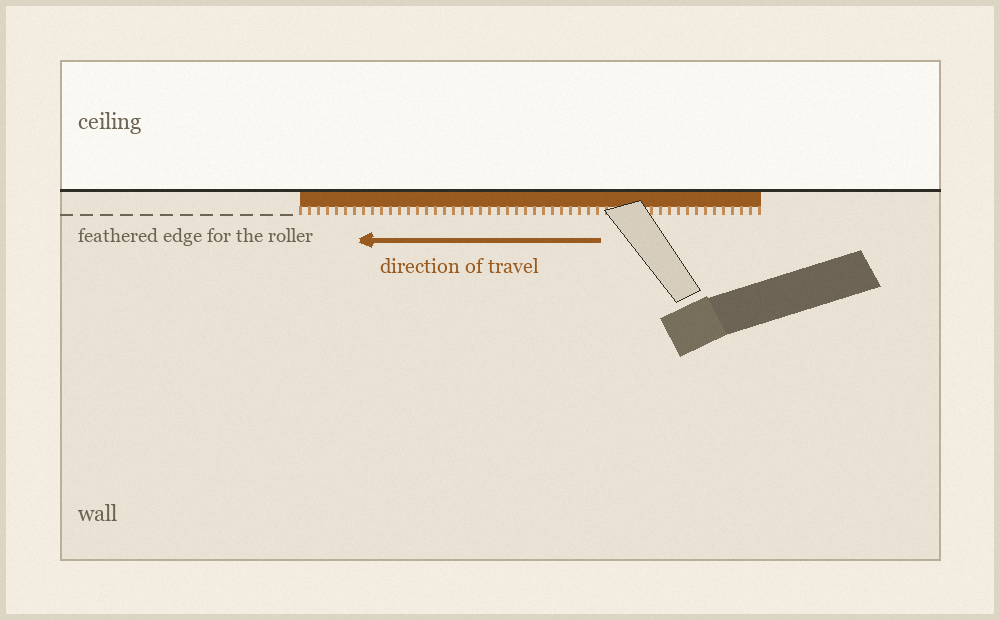
Cutting in is the part of painting that decides whether a room looks finished or looks attempted. Everything else is coverage. The line where the wall stops and the ceiling begins is at eye level for the whole life of the room, and a wobble there is the first thing a visitor's eye lands on, long before anyone notices that the roller left a light patch behind the door.
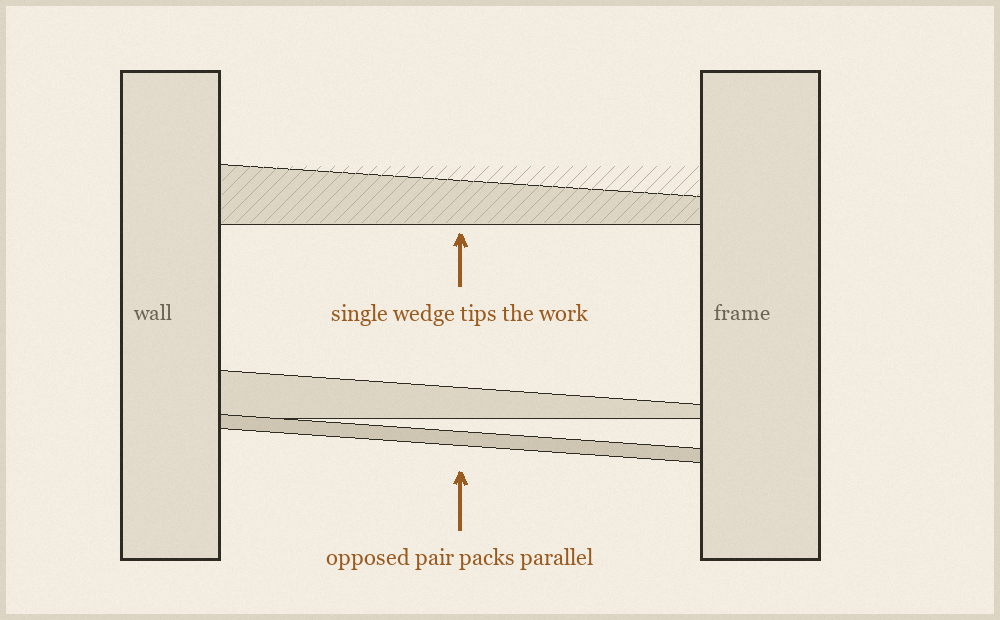
A shim is a thin tapered wedge, and on its own it is nearly useless for the job most people try to do with it. Driven into a gap alone, a single shim does not fill the gap; it fills a triangle. Whatever it is holding ends up tipped by exactly the angle of the taper, which is why a door hung on single shims swings shut on its own and a shelf packed with one sits proud at the front.
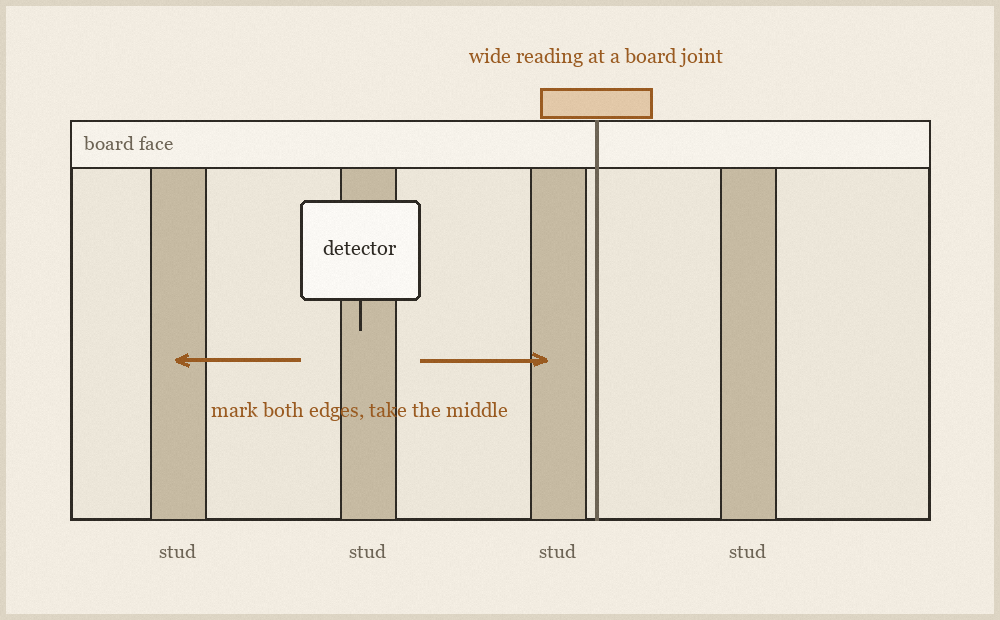
A density stud finder does not find timber. It finds a change in how much material sits behind the surface, and then reports that change as an edge. Most of the time the change is a stud. Sometimes it is a board joint, a run of tape and compound, a pipe, a cable, an old repair, or a second layer of board that stops halfway across the room. The tool is not lying so much as answering a narrower question than the one you asked.
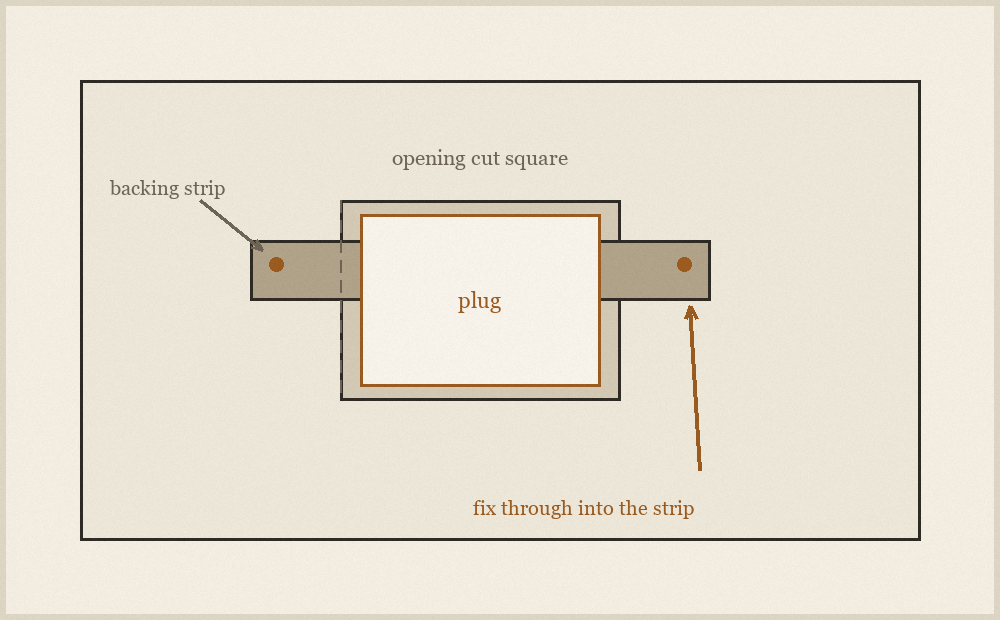
The hole a door handle punches into a wall is small, round and deep, and it is the most commonly botched repair in a house. Filler alone will not hold, because there is nothing behind it: the compound sags into the cavity as it dries and leaves a dimple that catches light from the side forever after. The repair needs something to bear against before it needs anything to smooth over.
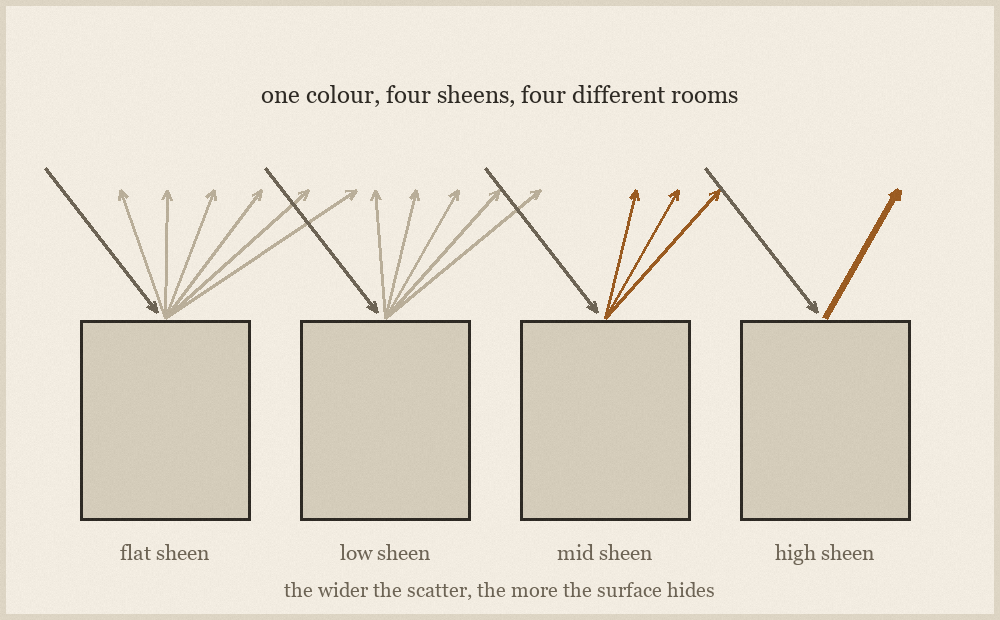
People choose colour for weeks and sheen in the last thirty seconds at the counter, and then wonder why the finished room does not look like the sample card. Sheen changes how much light bounces back at you, and light bouncing back at you is most of what you perceive as colour. The same tin, applied flat and applied at a higher sheen, will read as two different colours on two walls of one room.
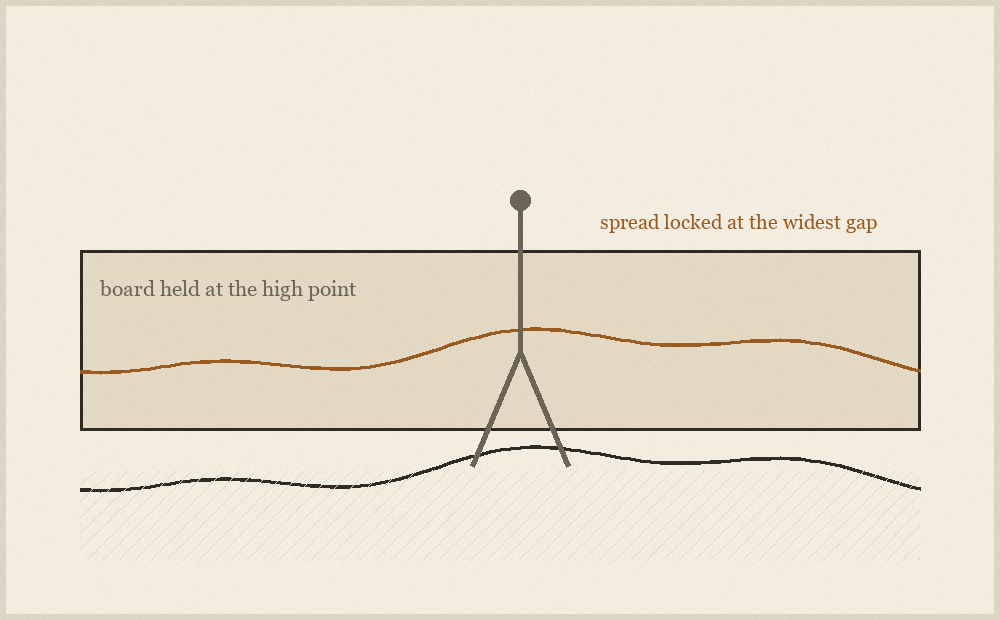
A board cut square meets a floor that is not, and the result is a wandering gap that no amount of filler makes honest. Scribing solves it by transferring the actual shape of the floor onto the board, so the cut follows the contour instead of ignoring it. It is one of the few genuinely old techniques that nothing has improved on.
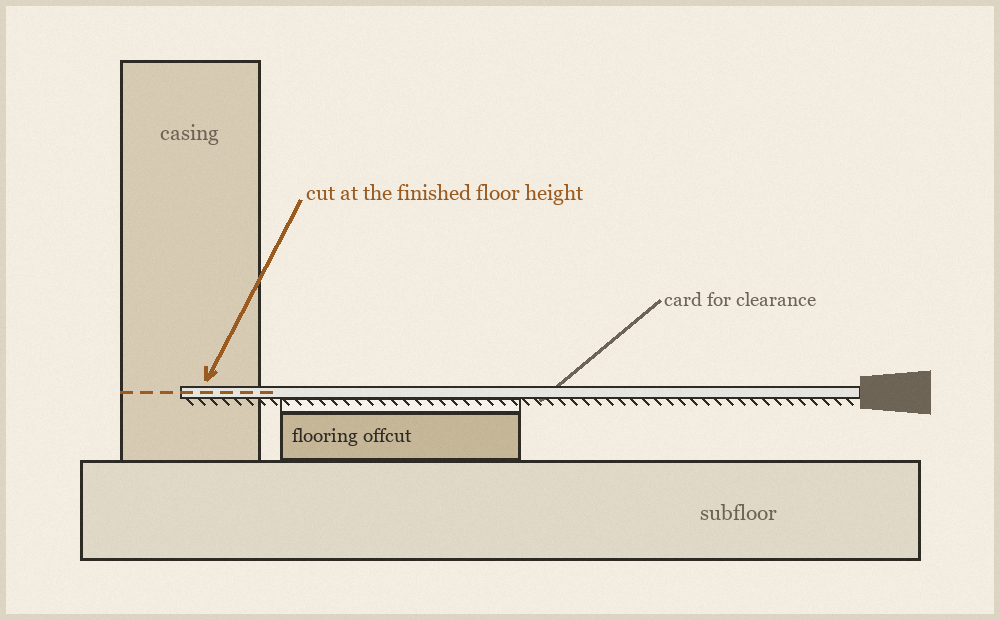
There are two ways to get a new floor past a door casing. You can cut the floor around the shape of the casing, or you can cut the casing and slide the floor underneath. The second is faster, more forgiving and looks better, and the only reason it is not universal is that it has to be done before the floor is laid, when the temptation is to get boards down and worry about details later.
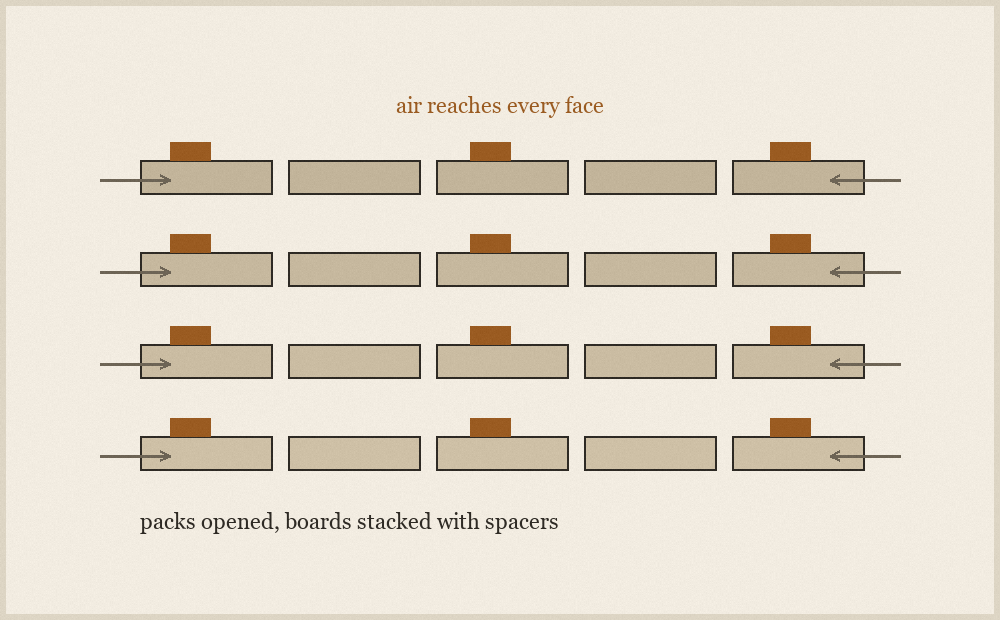
Timber takes up and gives off moisture until it is in balance with the air around it, and as it does so it changes size across the grain. Every problem that shows up in a wood floor months after it was laid is a version of this one fact. A floor laid dry in a damp room swells and buckles; a floor laid damp in a dry room shrinks and opens gaps between every board.
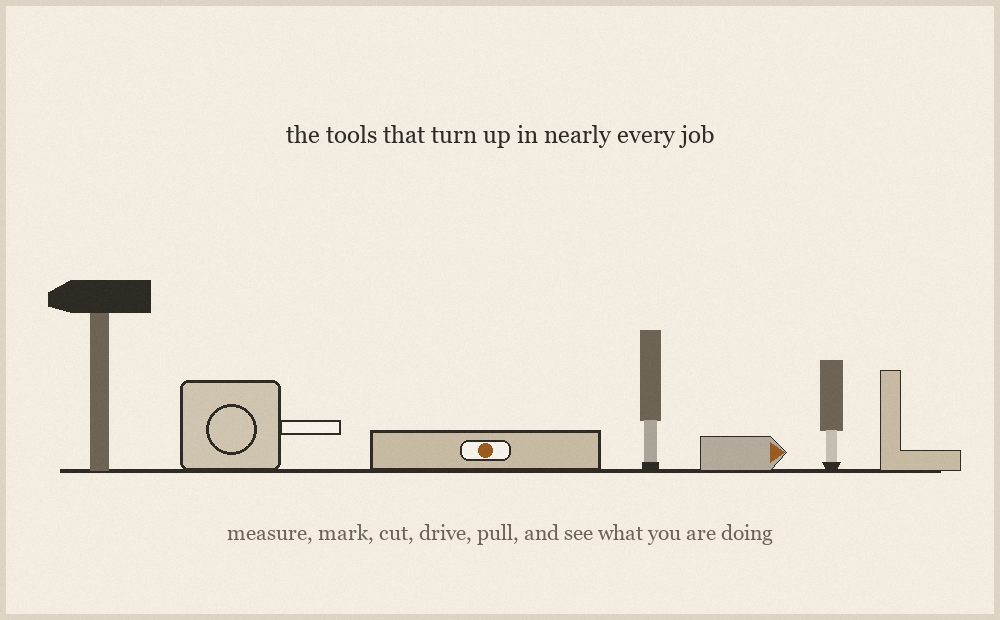
Most first tool kits are bought as a boxed set and half of it is never touched. The tools that actually earn their place are the ones that turn up in nearly every job regardless of what the job is, and there are fewer of them than the box suggests. What follows is a short list, with the reason each one keeps reappearing.
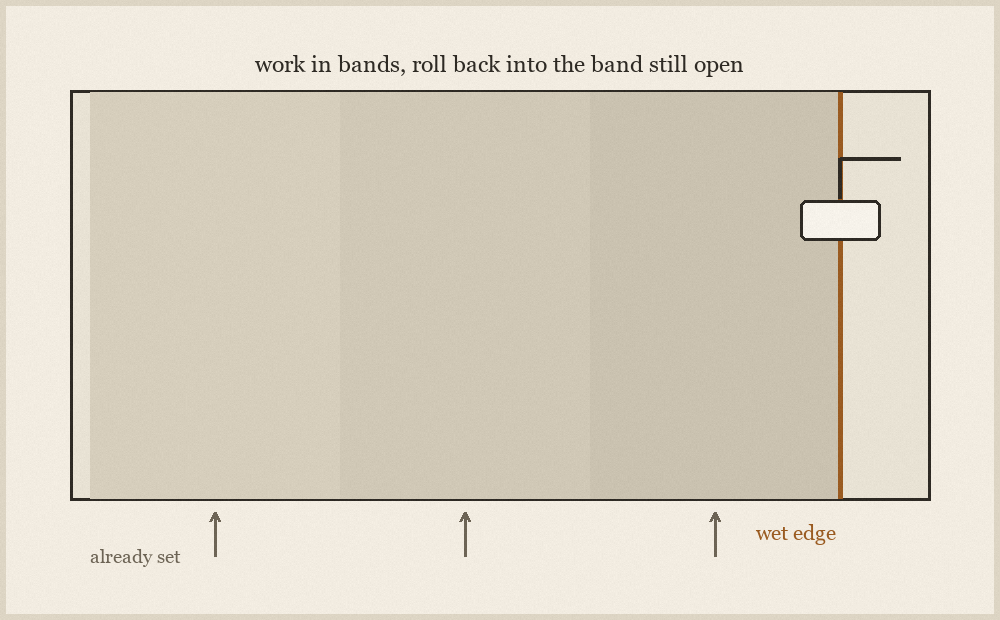
It is a common and demoralising experience: the first coat goes on and looks encouraging, the second goes on and the wall is suddenly covered in streaks, patches and visible laps. The instinct is to blame the paint. Usually the paint is fine and the second coat has simply revealed what the first coat was hiding.
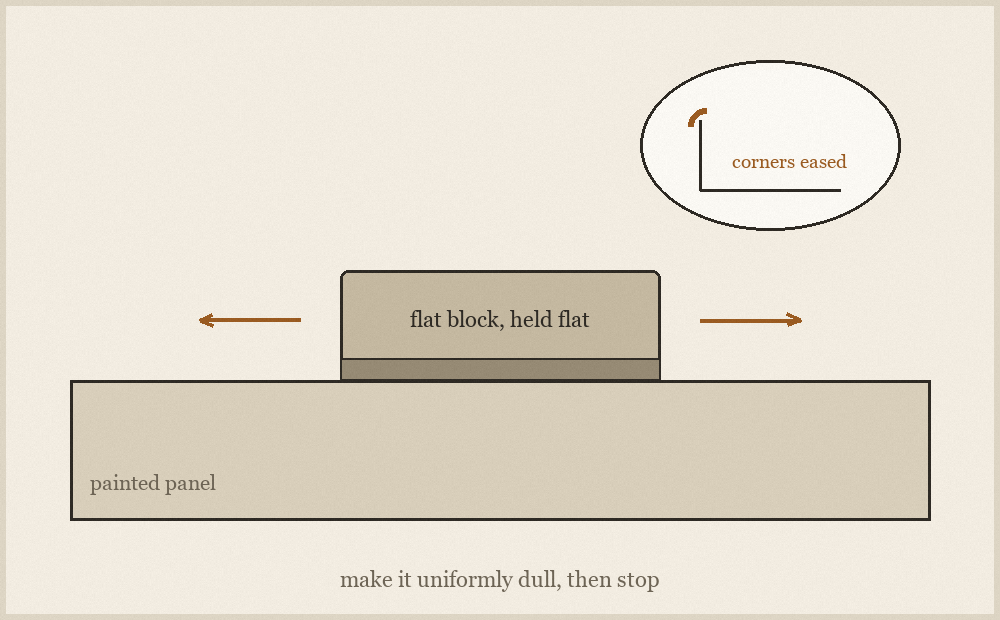
Sanding between coats is not about removing material. It is about knocking down the grain and the dust nibs that rose into the last coat so the next one has a flat surface to sit on. Once you hold that idea, the technique follows: light, flat, fine, and quick. Almost every failure comes from treating it as shaping rather than smoothing.
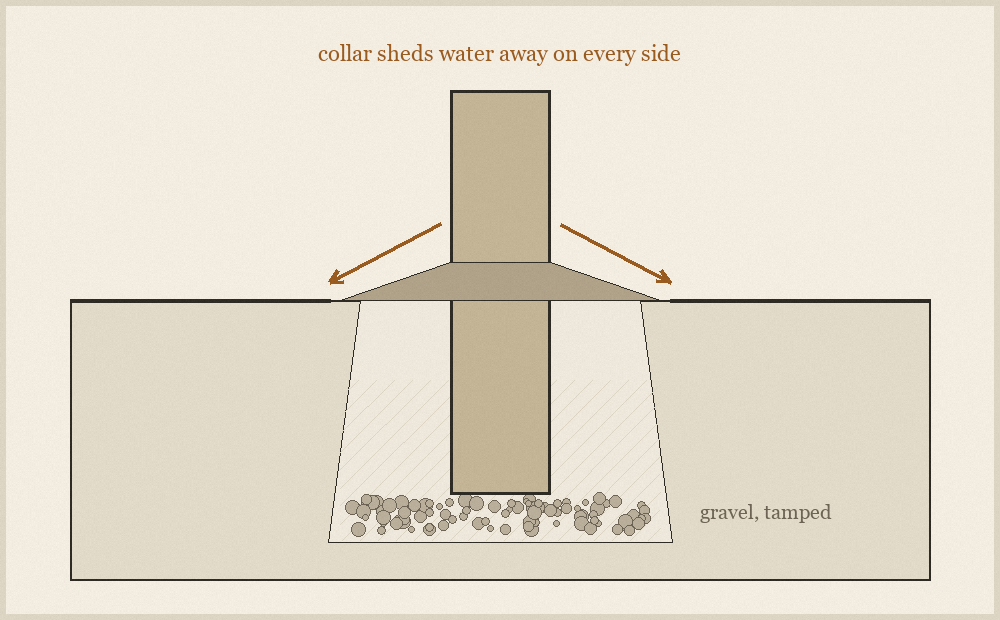
A fence post fails at ground level, almost without exception. It does not rot at the bottom, where people expect it to, and it rarely snaps in the middle. It goes where air and water meet the timber together, in the band just above and just below the surface, and everything about setting a post well is really about managing water at that band.
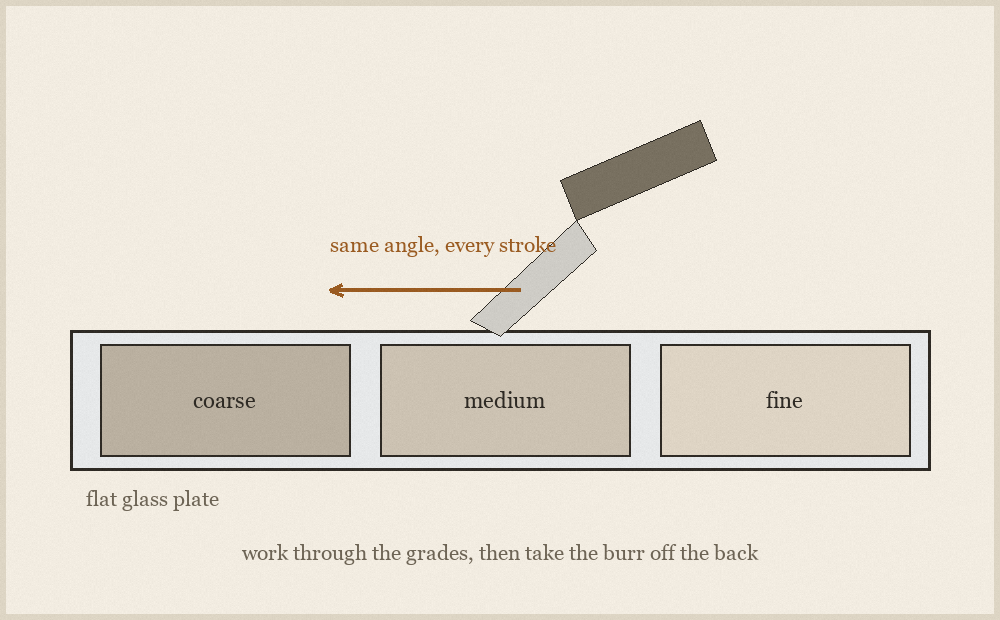
A sharp edge is two flat surfaces meeting, and sharpening is the business of making both of them flat and making them meet cleanly. Nothing else in the process matters as much as that, which is why sharpening on abrasive paper stuck to a piece of flat glass works as well as it does. The glass supplies the flatness; the paper supplies the cut.
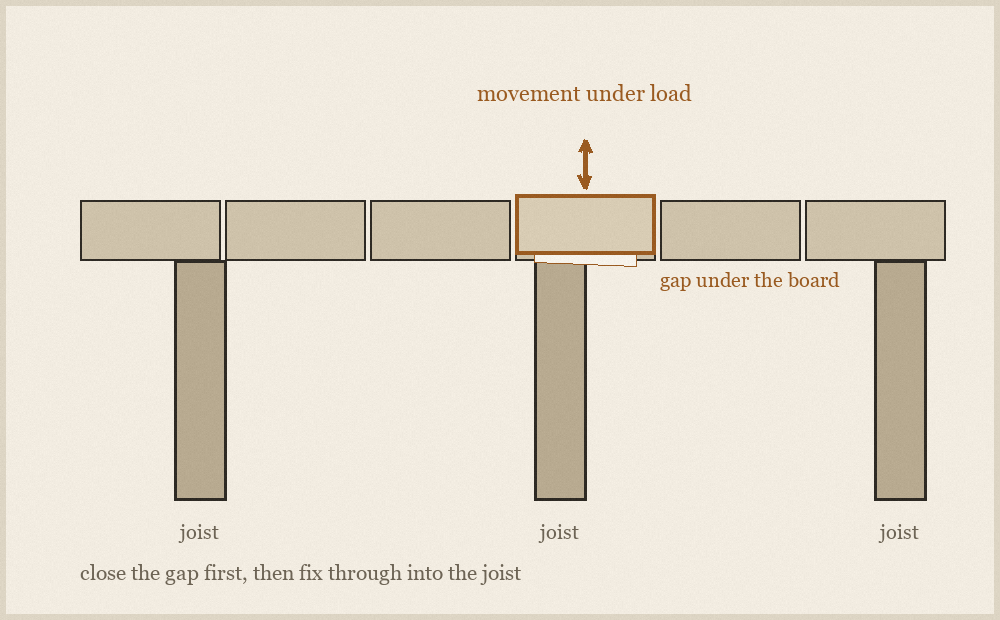
A floor squeak is movement, and the movement is almost always a board rising off its support under load and dropping back as the load passes. The noise itself is a nail shank rubbing in its hole, or two edges of timber moving against each other. Find which of those two it is and the repair is straightforward. Guess, and you will fix half the squeaks in the room and create a few new ones.