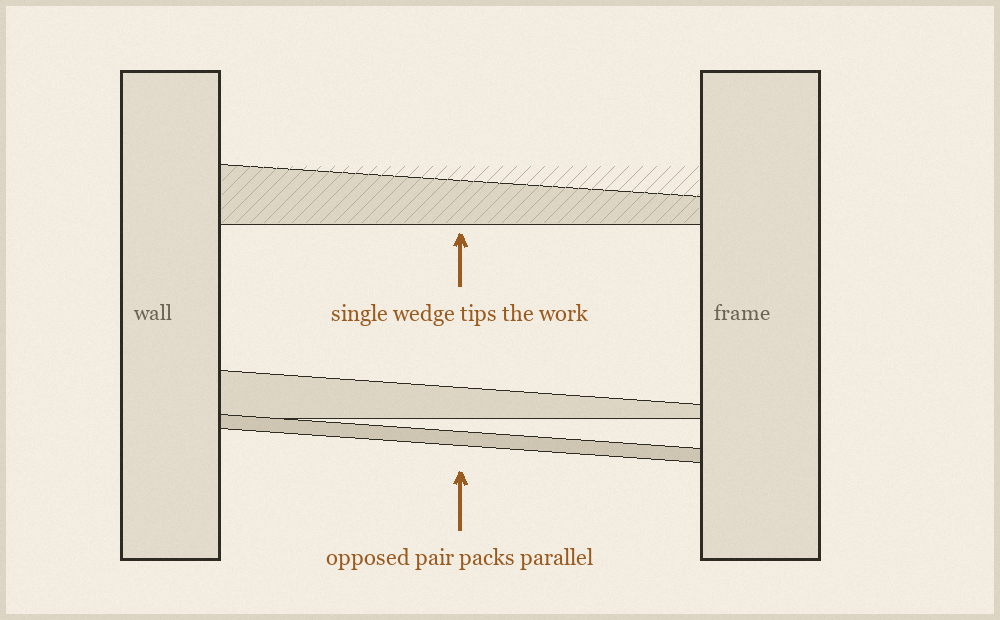
A shim is a thin tapered wedge, and on its own it is nearly useless for the job most people try to do with it. Driven into a gap alone, a single shim does not fill the gap; it fills a triangle. Whatever it is holding ends up tipped by exactly the angle of the taper, which is why a door hung on single shims swings shut on its own and a shelf packed with one sits proud at the front.
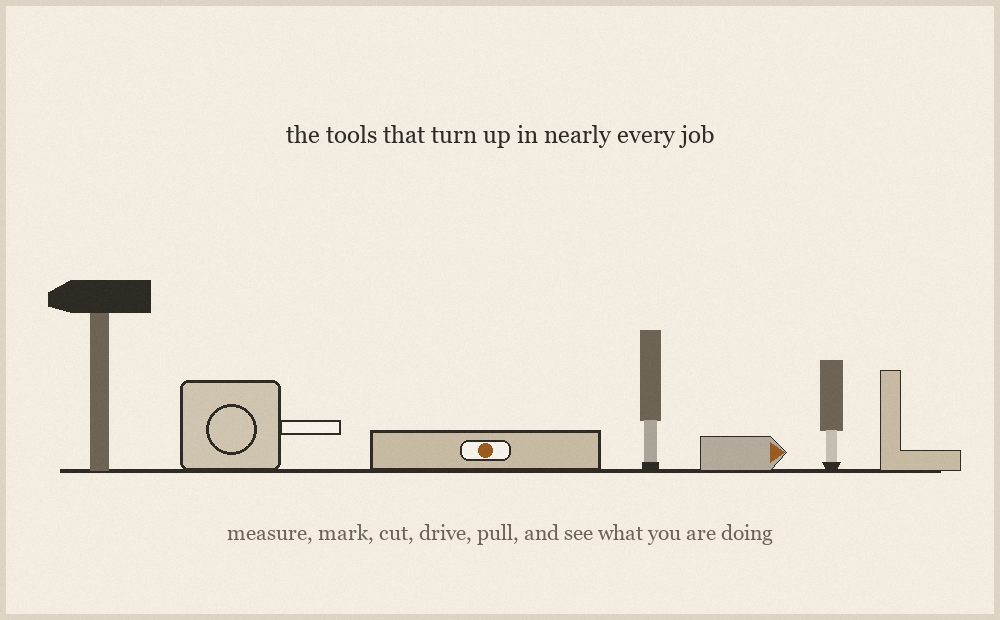
Most first tool kits are bought as a boxed set and half of it is never touched. The tools that actually earn their place are the ones that turn up in nearly every job regardless of what the job is, and there are fewer of them than the box suggests. What follows is a short list, with the reason each one keeps reappearing.
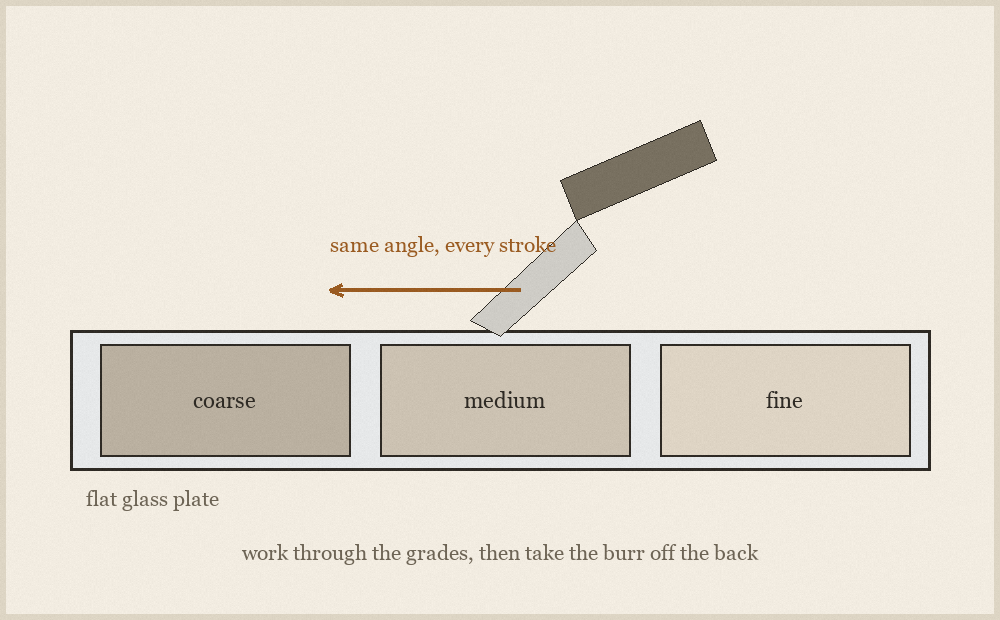
A sharp edge is two flat surfaces meeting, and sharpening is the business of making both of them flat and making them meet cleanly. Nothing else in the process matters as much as that, which is why sharpening on abrasive paper stuck to a piece of flat glass works as well as it does. The glass supplies the flatness; the paper supplies the cut.