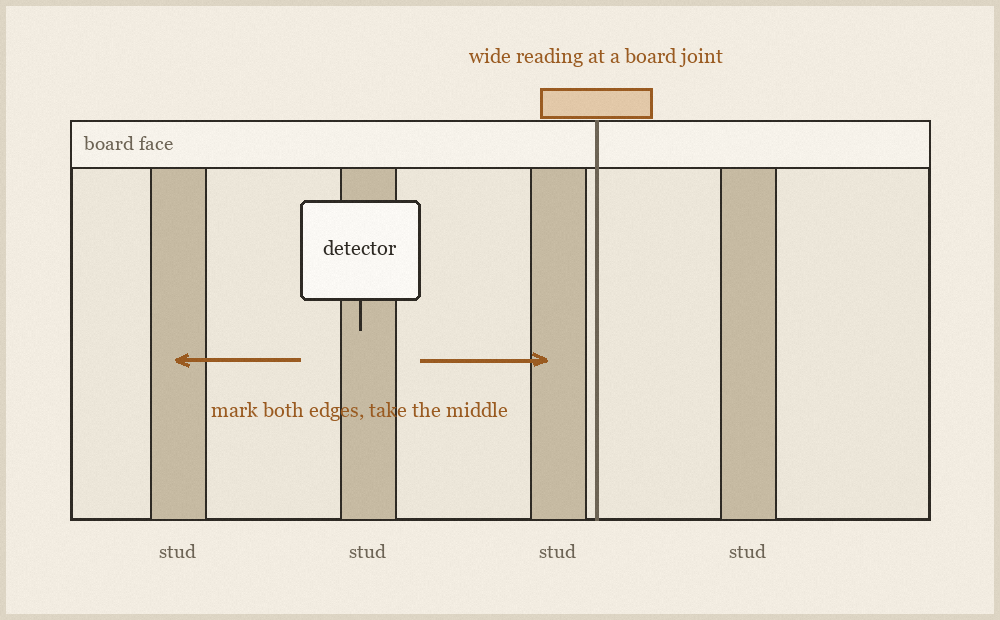
A density stud finder does not find timber. It finds a change in how much material sits behind the surface, and then reports that change as an edge. Most of the time the change is a stud. Sometimes it is a board joint, a run of tape and compound, a pipe, a cable, an old repair, or a second layer of board that stops halfway across the room. The tool is not lying so much as answering a narrower question than the one you asked.
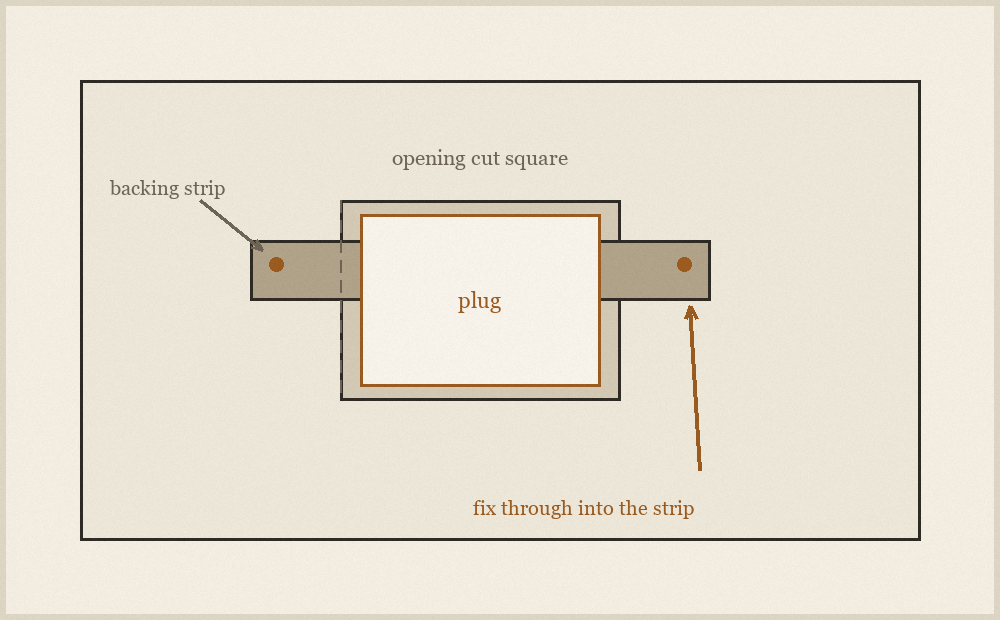
The hole a door handle punches into a wall is small, round and deep, and it is the most commonly botched repair in a house. Filler alone will not hold, because there is nothing behind it: the compound sags into the cavity as it dries and leaves a dimple that catches light from the side forever after. The repair needs something to bear against before it needs anything to smooth over.
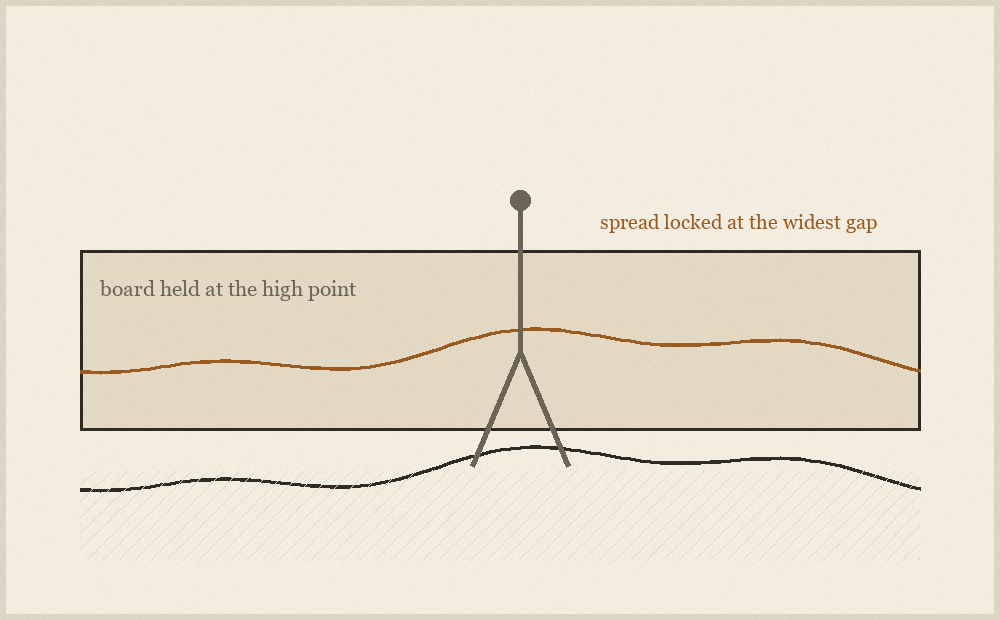
A board cut square meets a floor that is not, and the result is a wandering gap that no amount of filler makes honest. Scribing solves it by transferring the actual shape of the floor onto the board, so the cut follows the contour instead of ignoring it. It is one of the few genuinely old techniques that nothing has improved on.